Test Day in Miniature: Building a Practice Environment That Mirrors the Real RBT Certification Experience

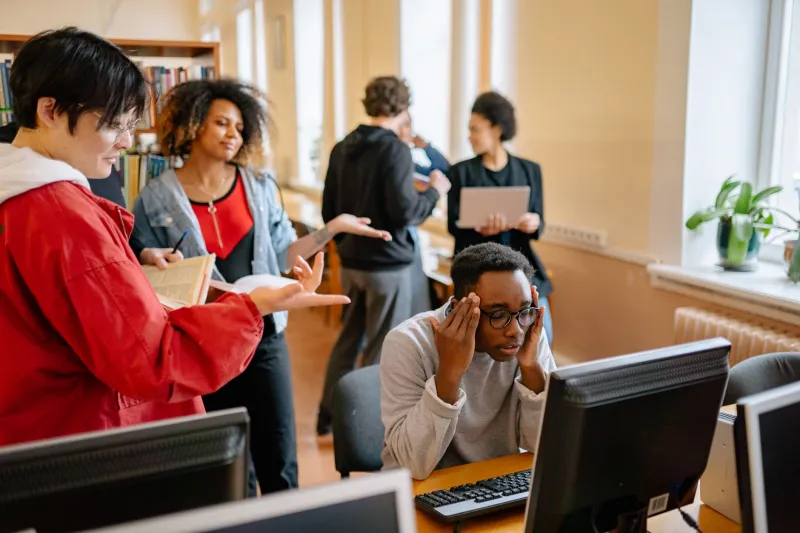
There is a particular kind of frustration that strikes candidates who walk out of the RBT certification exam feeling blindsided—not by the content, which they knew thoroughly, but by something harder to name. The chair was uncomfortable. The room hummed with fluorescent noise. The person two seats over typed aggressively. Their carefully rehearsed thinking seemed to dissolve under conditions they had never once practiced in.
This is not an unusual story. It is, in fact, a predictable outcome when preparation focuses exclusively on what to study and ignores where and how the studying happens. The environment in which you rehearse a skill shapes the neural pathways you build around it. When test day introduces a completely different sensory landscape, those pathways do not transfer as cleanly as expected.
Understanding why that happens—and what to do about it—can meaningfully change your outcome on exam day.
The Neuroscience of Context-Dependent Memory
Cognitive psychologists have long recognized a phenomenon called context-dependent memory: the brain encodes information alongside the environmental cues present during learning. When retrieval happens in a different context, those cues are absent, and recall becomes measurably less efficient.
For RBT candidates, this means that studying at a kitchen table with background music, a snack nearby, and the freedom to pause at will creates a memory context that does not match a Pearson VUE or Prometric testing center. The content you learned is still there. But the retrieval pathway you built was optimized for your kitchen, not for a supervised, time-limited, fluorescent-lit cubicle.
The solution is not to study less at home. It is to deliberately introduce exam-like conditions into at least a portion of your practice sessions—particularly as your exam date approaches.
What the Actual Testing Environment Looks Like
Before you can replicate conditions, you need a clear picture of what those conditions involve. Authorized testing centers in the United States typically share several characteristics:
- Lighting: Overhead fluorescent lighting, often harsh and fixed. You cannot dim it or adjust it.
- Sound: A low ambient hum from computers and HVAC systems, occasional keyboard sounds from other test-takers, and periodic movement from proctors.
- Seating: A standard desk chair, typically without armrests or ergonomic adjustment. You will sit in this chair for the full duration of the exam.
- Screen and interface: A standard desktop monitor displaying questions one at a time. Navigation is controlled by mouse clicks rather than keyboard shortcuts.
- No personal items: No water bottle at your station (in most centers), no phone, no notes, no snacks. A small whiteboard or scratch paper may be provided.
- Check-in protocol: You will be photographed, asked to empty your pockets, and potentially scanned before entering the testing room. This process can take fifteen to twenty minutes and introduces stress before the exam even begins.
- Time pressure: The exam timer is visible on screen throughout the session.
Each of these elements, taken individually, seems minor. Taken together, they constitute a sensory environment that is meaningfully different from most candidates' study setups.
Building Your Simulation Checklist
The goal is not to make every study session uncomfortable. It is to ensure that, in the final two to three weeks before your exam, you have spent enough time in exam-like conditions that the real thing does not feel foreign.
1. Eliminate comfort items during timed sessions. When running a full-length practice exam, remove the coffee, the snacks, and the phone from your workspace. Sit in a chair without cushions or back support if possible. Close the door. These small deprivations train your nervous system to function under mild physical restriction.
2. Introduce ambient sound at a fixed, non-adjustable level. Search for "testing center ambient noise" or "office background noise" on YouTube or a similar platform. Play it at a moderate volume and do not adjust it once your session begins. The point is not distraction for its own sake—it is the inability to control your auditory environment, which mirrors real exam conditions precisely.
3. Use harsh or neutral lighting. If you typically study with warm lamps or in a softly lit room, switch to overhead lighting or a bright desk lamp for your simulation sessions. Fluorescent-style LED bulbs are widely available and inexpensive. Eye fatigue under bright fixed lighting is a real variable that can affect performance over a 90-minute session.
4. Replicate the check-in experience mentally. On the morning of a simulation session, treat the thirty minutes before you begin as a compressed version of the testing center arrival process. Do not review notes. Do not listen to calming music. Simply sit with the anticipation. Pre-exam anxiety is itself a condition you can practice tolerating.
5. Account for time-zone and schedule alignment. If your exam is scheduled for 8:00 a.m. and you have been studying primarily in the evenings, your cognitive performance at that hour may be meaningfully lower than you expect. Run at least two or three full simulation sessions at the same time of day as your scheduled exam. Circadian rhythms affect memory retrieval, and this detail is frequently overlooked.
6. Practice with the actual question interface format. Many RBT practice platforms, including full-length mock exams, present questions in a format that approximates the real exam interface. Use these tools rather than printed flashcards or PDF documents in your final preparation phase. The muscle memory of navigating a timed digital exam is a real and trainable skill.
7. Do not pause the timer. This is perhaps the most important rule for simulation sessions. The moment you pause a practice exam to look something up, check your phone, or take an unscheduled break, you have broken the simulation. Commit to the full session without interruption, even when you feel uncertain or fatigued. That discomfort is data about your current readiness.
The Preparation Gap No One Talks About
RBT exam preparation resources—including many excellent ones—focus almost entirely on content mastery. That focus is appropriate; you cannot pass the exam without knowing the material. But content mastery and performance under pressure are two distinct competencies, and the second one requires its own deliberate practice.
Candidates who have taken full-length mock exams under genuine simulation conditions consistently report that the real exam feels less surprising. Not easier, necessarily—but familiar in its structure and sensory demands. That familiarity reduces cognitive load, leaving more mental resources available for the actual work of answering questions accurately.
If you are within three weeks of your exam date and have not yet run a single fully simulated session, this is the highest-leverage adjustment you can make to your remaining preparation time. The content you know will serve you better when the environment no longer feels like an obstacle.
A Final Note on Realistic Expectations
Simulation is not about making your practice sessions miserable. It is about closing the gap between the conditions under which you learned and the conditions under which you will be tested. Even two or three well-constructed simulation sessions can recalibrate your nervous system's response to exam-day stressors.
The candidates who pass the RBT certification exam are not always the ones who studied the most. They are often the ones who prepared most completely—content, strategy, and environment alike. That third element is within your control, and it is never too late to start building it into your preparation.