Practicing in Comfort, Testing in Chaos: How to Bridge the Gap Between Mock Exams and Real Certification Conditions
The Comfort Trap: Why Familiar Study Spaces Can Work Against You
There is something deeply appealing about settling into your favorite chair, adjusting the lighting to your preference, and opening a practice exam on a familiar device. For most RBT candidates in the United States, this is the default study environment—and it produces a false sense of readiness that can quietly undermine performance when it matters most.
The problem is not the quality of the practice material. It is the mismatch between where you are rehearsing and where you will actually be tested. Official BACB-authorized testing centers operate under conditions that are deliberately controlled, unfamiliar, and in many ways uncomfortable. Candidates who have only ever practiced in low-pressure domestic settings often encounter a wall of unexpected stress the moment they sit down at an official workstation—and that stress consumes cognitive resources that should be reserved for answering questions accurately.
Closing this gap is not merely a matter of working harder. It requires deliberately engineering your practice sessions to mirror the conditions you will face on exam day.
What the Official Testing Environment Actually Looks Like
Before you can simulate real test conditions, it helps to understand precisely what makes them different from home practice.
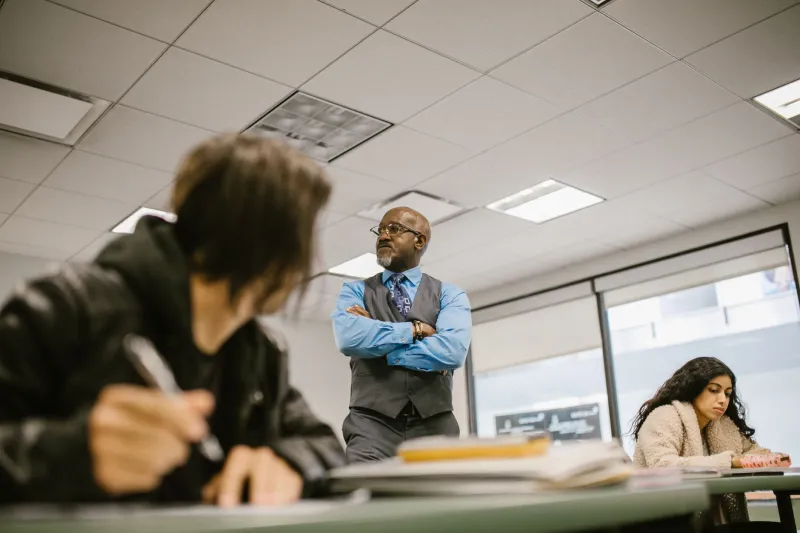
Pearson VUE testing centers—the primary authorized provider for BACB examinations—operate according to strict protocols. Upon arrival, candidates are required to present valid identification, submit to biometric check-in procedures, and surrender personal belongings including phones, bags, and often even watches. You are escorted to a workstation in a monitored room where other test-takers may be seated nearby, each working on entirely different examinations.
The physical setup is standardized but not ergonomic in the way your home desk might be. The chair may be less comfortable than what you are used to. The monitor resolution, keyboard sensitivity, and mouse responsiveness may differ from your personal equipment. The room temperature is controlled by the facility, not by you. Background noise—the faint clicking of keyboards, the occasional movement of a proctor—is present but inconsistent, making it harder to tune out than steady ambient noise.
Perhaps most significantly, a human proctor is observing you. Whether in person or through a camera system, the awareness of being watched introduces a layer of performance anxiety that simply does not exist when you are practicing alone in your living room.
The Psychological Weight of Proctoring Anxiety
Research on test anxiety consistently identifies evaluation apprehension—the discomfort of being observed and judged—as a meaningful contributor to performance decrements. For RBT candidates who have spent weeks or months practicing independently, the sudden introduction of a monitoring presence can feel jarring.
This is not a character flaw or a sign of insufficient preparation. It is a predictable psychological response to an unfamiliar evaluative context. The brain interprets the proctor's presence as a social threat, which activates stress responses that impair working memory and slow processing speed—precisely the cognitive functions you need most during a timed examination.
The solution is exposure. Candidates who practice under conditions that include some form of external accountability—a study partner observing silently, a webcam recording the session, or a self-imposed rule against pausing or checking a phone—report feeling significantly less destabilized by official proctoring. The goal is to make the sensation of being watched feel unremarkable before you ever step into the testing center.
Interface Unfamiliarity and the Hidden Time Cost
Another underappreciated source of exam-day friction is the computer interface itself. Pearson VUE uses a proprietary testing platform with a specific layout, navigation structure, and question-flagging system. Candidates who have only practiced on standard web browsers or PDF-based mock exams may spend the first several minutes of the actual exam simply orienting themselves to the interface—time and mental energy that cannot be recovered.
To mitigate this, familiarize yourself with the Pearson VUE testing platform in advance. The BACB website and Pearson VUE's own resources include tutorial information about the exam interface. Reviewing these materials and, where possible, completing practice exercises in a full-screen, distraction-free browser window will help your brain begin associating exam-style navigation with the content you are studying.
Additionally, practice using a physical mouse rather than a trackpad if your home setup relies on the latter. The motor adjustment is small but real, and eliminating it as a variable on exam day is worth the minor inconvenience during preparation.
Engineering a High-Fidelity Practice Environment
The following strategies are designed to systematically reduce the environmental distance between your practice sessions and official exam conditions.
Establish a fixed time block. The RBT exam is administered at a scheduled appointment. Practice at a consistent time—ideally the same time of day you plan to test—so your body and mind are calibrated for peak performance at that hour.
Remove all comfort accommodations. During timed practice sessions, do not use noise-canceling headphones, preferred beverages, or any other comfort items that will not be available at the testing center. Sit at a desk rather than a couch. Keep the room at a temperature that is functional rather than ideal.
Enforce a no-pause policy. Real exams do not allow for mid-session breaks to check notifications or stretch at will. Practice completing full timed blocks without interruption. If you must pause, treat it as a simulation of the formal break protocols that testing centers provide, rather than an informal pause.
Introduce low-grade ambient noise. Coffee shop background noise, available through various free streaming services, approximates the inconsistent ambient sound of a testing center better than complete silence does. Training yourself to concentrate through mild auditory interference is a practical skill that translates directly to exam day.
Use a timer with a visible countdown. Knowing that time is passing is different from seeing time disappear. A prominent countdown timer creates urgency that static time-blocks do not, and practicing under that visible pressure trains your pacing instincts more effectively.
Arriving Prepared for the Physical Reality
Candidates frequently underestimate how much physical discomfort affects cognitive performance. Sitting in an unfamiliar chair for two or more hours while under pressure is taxing in ways that home practice rarely replicates. In the days leading up to your exam, practice sitting at a hard chair or desk for extended periods to acclimate your body to sustained, stationary focus.
Also plan your exam-day logistics with the same care you would apply to a professional appointment. Know your testing center's location, parking situation, and check-in procedures in advance. Arriving flustered because of a navigation problem or an unexpectedly long security line adds unnecessary stress before the first question appears on screen.
The Gap Is Closable
The distance between a comfortable home practice session and an official BACB testing center is real—but it is not insurmountable. Candidates who deliberately expose themselves to the conditions of the real exam during preparation consistently report feeling more composed, more focused, and better able to access what they have learned when it counts.
Your mock exam scores reflect your knowledge. Your simulation fidelity determines whether that knowledge shows up under pressure. Treat both as essential components of a complete preparation strategy, and exam day will hold far fewer surprises.